
Why a short demo beats a long cover letter
When CS grads keep rising and entry-level hiring falls, proof beats adjectives.
Recruiters skim. Hiring managers remember proof.
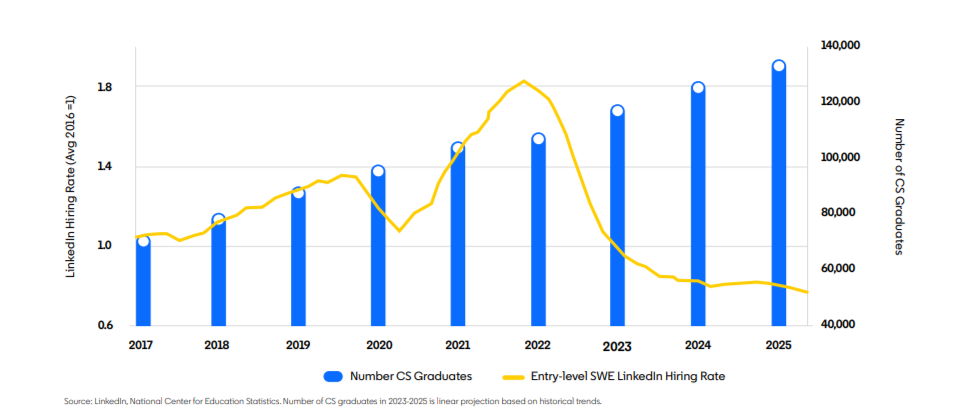
The graph below makes the problem obvious. The number of computer science graduates keeps climbing, while entry-level software engineering hiring has moved the other direction.
Source: Final Round AI, "Computer Science Graduates Face Worst Job Market in Decades"
That means more candidates are competing for fewer junior openings. In that kind of market, a long cover letter is usually weak signal. Almost everyone can say they are hardworking, curious, fast-learning, and passionate about the company.
A short demo does something a cover letter usually cannot:
- It shows that you can turn a vague prompt into something concrete.
- It proves you can scope, build, and explain a relevant project.
- It gives a recruiter or hiring manager something easy to remember and forward.
- It creates evidence, not just intent.
That is why short matters too. A 60 to 120 second walkthrough respects attention. It is fast to open, fast to understand, and fast to share internally. It also forces clarity: what the role asked for, what you built, and why it matters.
The strongest version is not a random portfolio piece. It is a demo tied directly to the internship posting. That is what makes it feel relevant instead of generic.
Jobloom is built around that workflow:
Research -> Company-aware proposal -> Tailored working demo -> Short recorded walkthrough
You do not need Hollywood production value. You need something real enough to show, short enough to watch, and relevant enough to make a hiring team stop scrolling.
If you want a stronger general guide to the same outreach mindset, read Quarter Mile's How To Get Hired at a Startup. It reinforces the same idea: generic applications blur together, while specific proof and clear relevance are much easier to notice.